


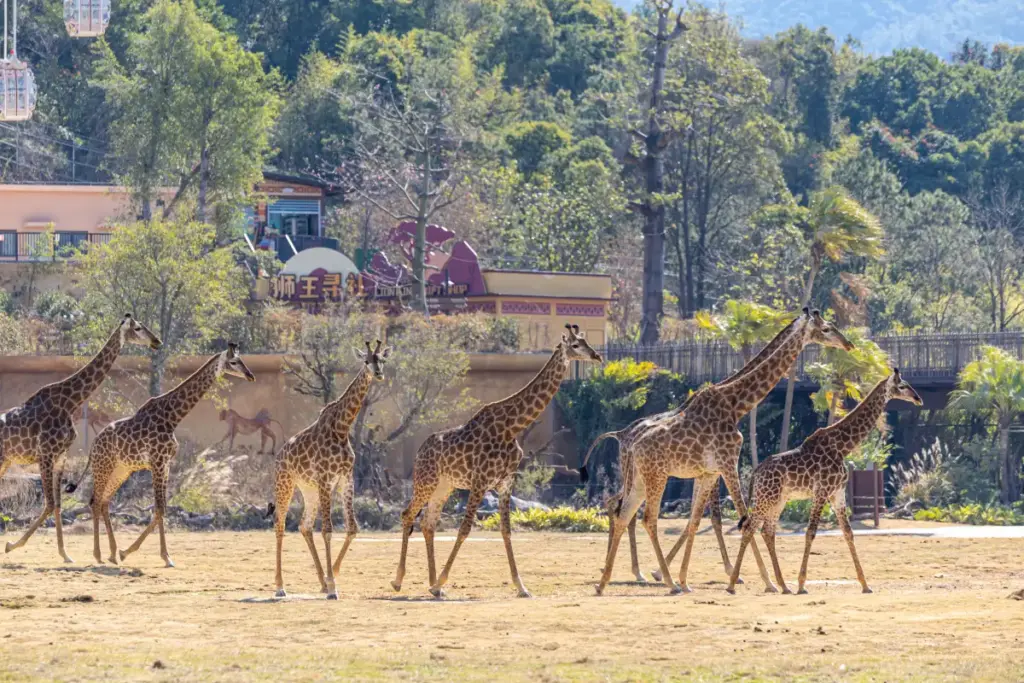
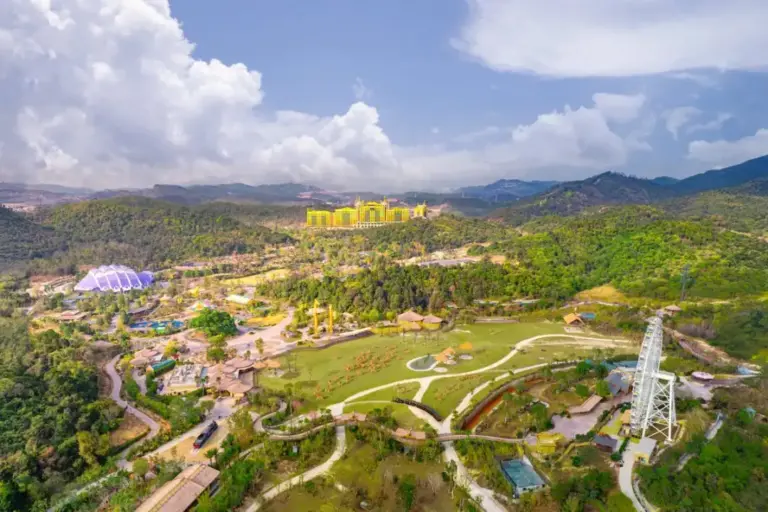
Walk ten minutes in any direction inside 清远长隆森林王国 and you will meet a different animal neighborhood: macaws flashing through a rainforest aviary, a brown bear fishing rocks beside a pool, a tower of giraffes drifting across open savanna, lemurs sunbathing on rope bridges. The park’s 12 themed lands are built around wildlife first and rides second, and the animals are the reason most visitors come. This guide maps every major habitat, the encounters worth your money, the times animals are actually awake, and the etiquette that keeps both sides happy.
Everything below comes from our own visits, keeper conversations and the park’s official Trip.com listing, last checked in November 2026. Feeding times shift seasonally — the boards at the main gate carry each day’s schedule, and we suggest photographing that board the moment you walk in.
⚡ Quick answer: Spend your first hour on the steam train through Greater Africa, hand-feed giraffes at the Giraffe Savanna platform before noon, watch the lions from the Lion King Mountain deck after lunch, and give the bird life — flamingos, cranes, storks, owls — the quiet late-afternoon slot when the light and the birds are both at their best.
🌍 The Map: Twelve Lands, Four Animal Neighborhoods 🗺️
The 12 themed lands cluster into four wildlife districts, and organizing your day by district beats chasing individual exhibits:
| District | Lands | Headline Animals |
|---|---|---|
| 🌾 Greater Africa savanna | Giraffe Savanna, steam-train loop, safari paddocks | Giraffes, zebras, wildebeest, white rhinos, ostriches, African elephants |
| 🦁 Predator & bear country | Lion King Mountain, Bear Valley | Lions, brown bears |
| 🦜 Forest & primates | Parrot Rainforest, Ape & Monkey Island | Macaws and parrots, apes and monkeys, lemurs, eagle owls |
| 🦩 Wetlands & bugs | Flamingo lake, crane and stork wetlands, Little Bug World | Flamingos, crowned and red-crowned cranes, marabou and painted storks, pelicans, giant tortoises, invertebrates |
🚂 Start Where the Animals Start: the 10:00 Savanna 🦓
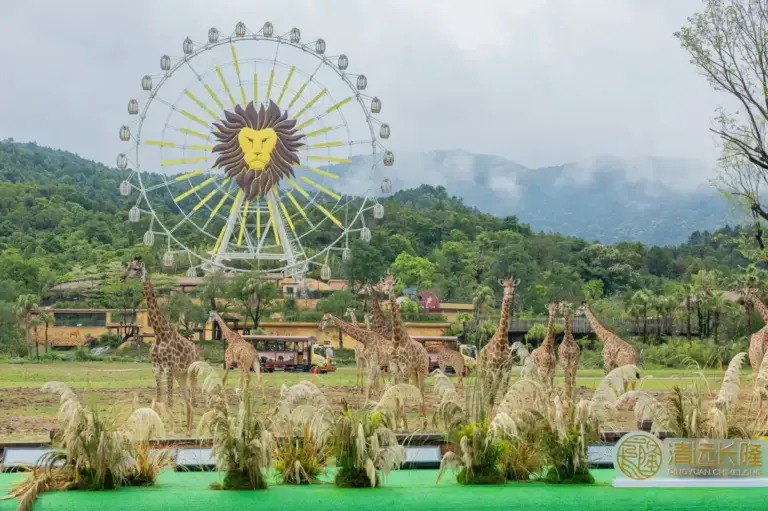
Grazers do their real moving in the first cool hours after opening. At 10:00 the Greater Africa savanna is a working landscape — giraffe herds walking between feeders, zebra groups repositioning, wildebeest lowing across the grass. The steam train (included in admission) is the most comfortable way to see all of it in half an hour, with open carriages and sightlines the walking paths cannot match. Sit right-hand side; ride early. Our full route guide is here: Crossing Greater Africa by Steam Train.
🦒 The Signature Encounter: Giraffe Feeding 🥕
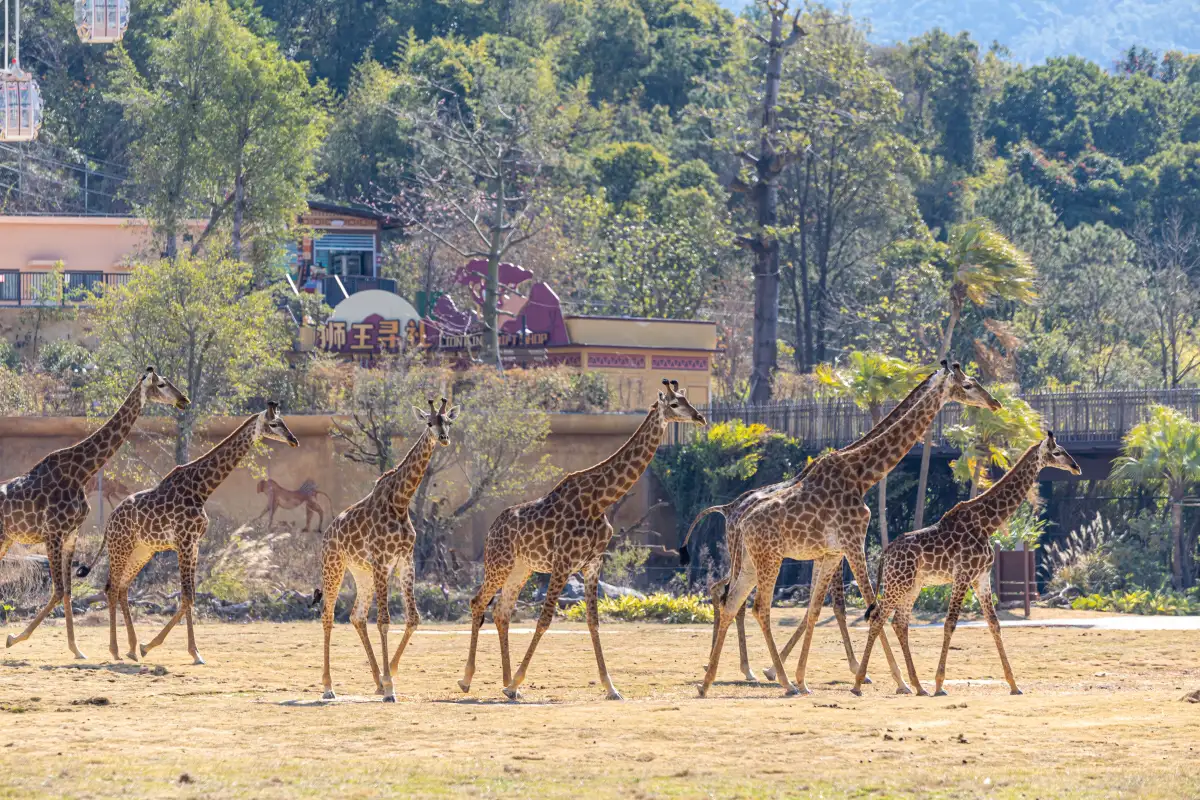
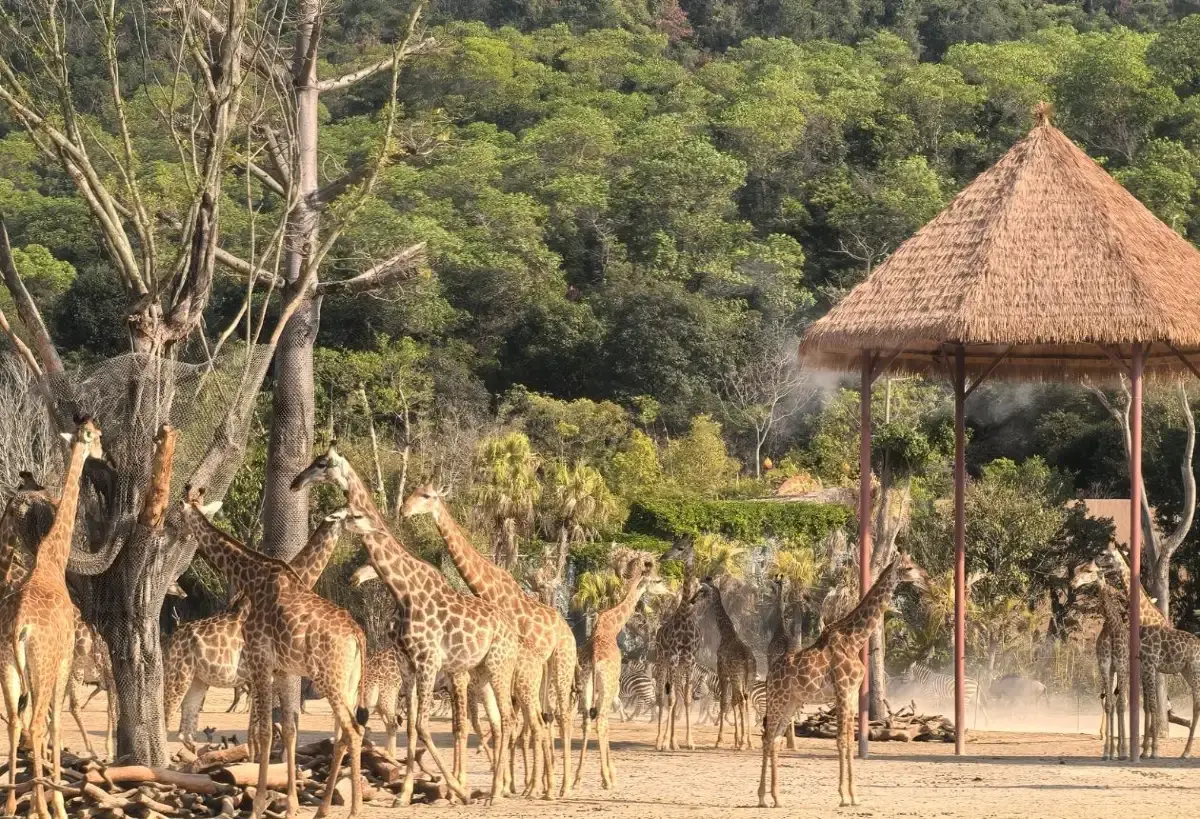
The elevated platform at the Giraffe Savanna is the park’s most beloved experience. You hold an acacia branch, a giraffe the height of a house plucks it from your hand with a tongue longer than your forearm, and — if you hold the second branch correctly — you get the close-up every relative expects. Keepers manage the flow so everyone gets a turn; the fee is modest and paid on site.
Three tips that improve the encounter:
- Go before noon. The giraffes approach the platform most willingly in the morning; afternoon feeding happens, but with more persuasion and longer queues.
- Stand a half-step left of center. Giraffes approach from the keeper’s side; the offset gets you the full reach-and-tongue moment rather than a snatch from above.
- Camera low. Shoot slightly upward with the head and neck filling the frame — the classic shot happens when the giraffe turns its head sideways to take the branch.
🦁 Lion King Mountain and Bear Valley: The Big Characters 🐻
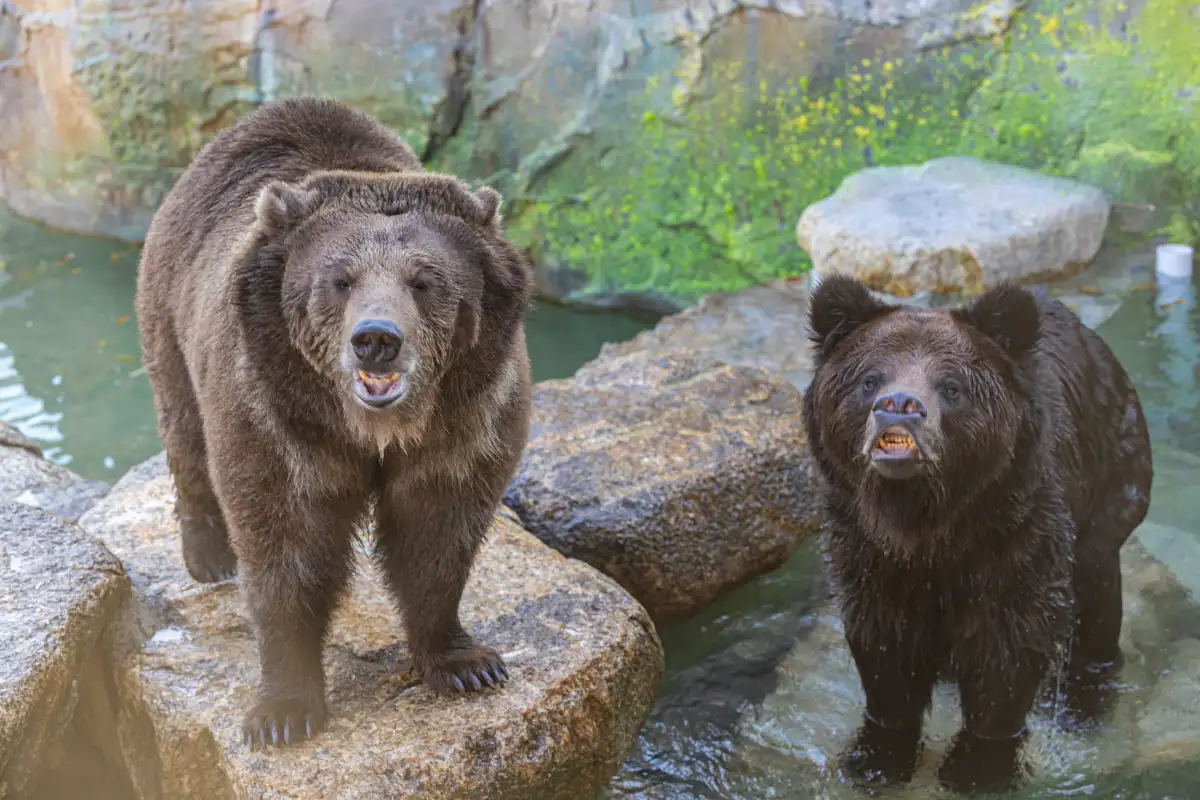
Lion King Mountain is designed as a viewing deck above a rocky habitat, and its residents treat it like a sun deck. Lions sleep most of the day anywhere in the world — arrive just after the midday heat (13:00–14:30) for the best chance of up-and-about cats, and bring the zoom: the deck is deliberately generous with distance. Bear Valley, meanwhile, is the park’s most entertaining habitat: brown bears fishing across boulders and, in warm months, swimming the pool. The lower path near the water is where the action concentrates.
Between them, the elephant paddocks anchor the savanna edge — the African elephant herd uses the bathing pool through the afternoon, and the sight of a full family group spraying water is a reliable crowd-gatherer. Keep your distance, keep your voice low, and let the animals behave naturally; this is a park that runs on calm.
🦜 Parrot Rainforest, Apes and Lemurs: The Forest District 🐒
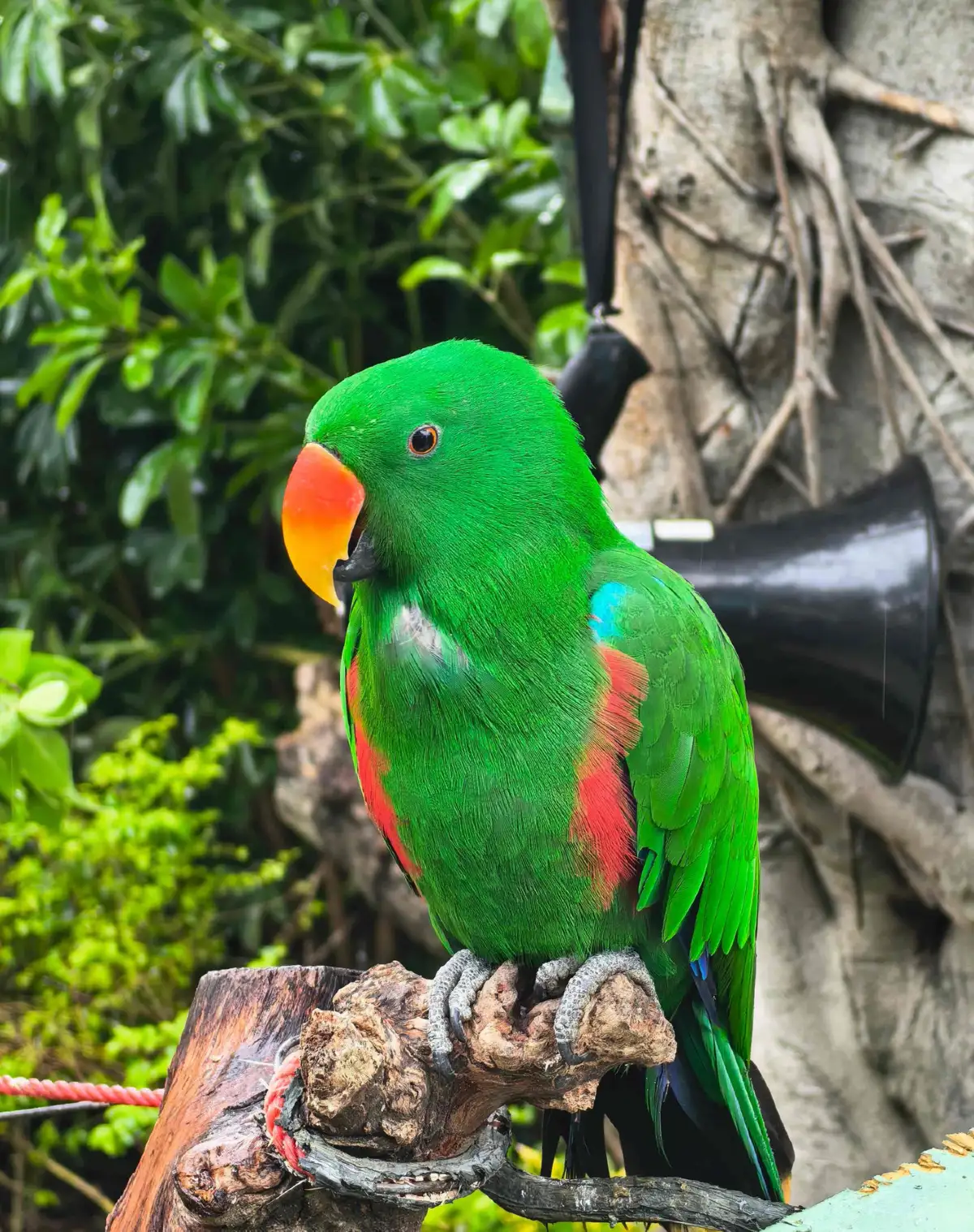
这 Parrot Rainforest entrance — carved signage flanked by macaw sculptures — opens into the loudest, most colorful district. Macaws and eclectus parrots perch along walkway feeding posts, and the free-flight moments (usually tied to keepers’ rounds) are worth timing. Ape & Monkey Island continues the district with the primates: the giant orangutan statue marks the zone, and the real residents are best watched at feeding rounds when the islands come alive.
The quiet stars of the district are the ring-tailed lemurs, who sunbathe on rope bridges with their arms out like tiny prophets, and the eagle owls dozing in the shaded groves. Both photograph beautifully mid-afternoon when the forest light goes soft and dappled.
🦩 The Wetlands Hour: Flamingos, Cranes and Storks 🦢
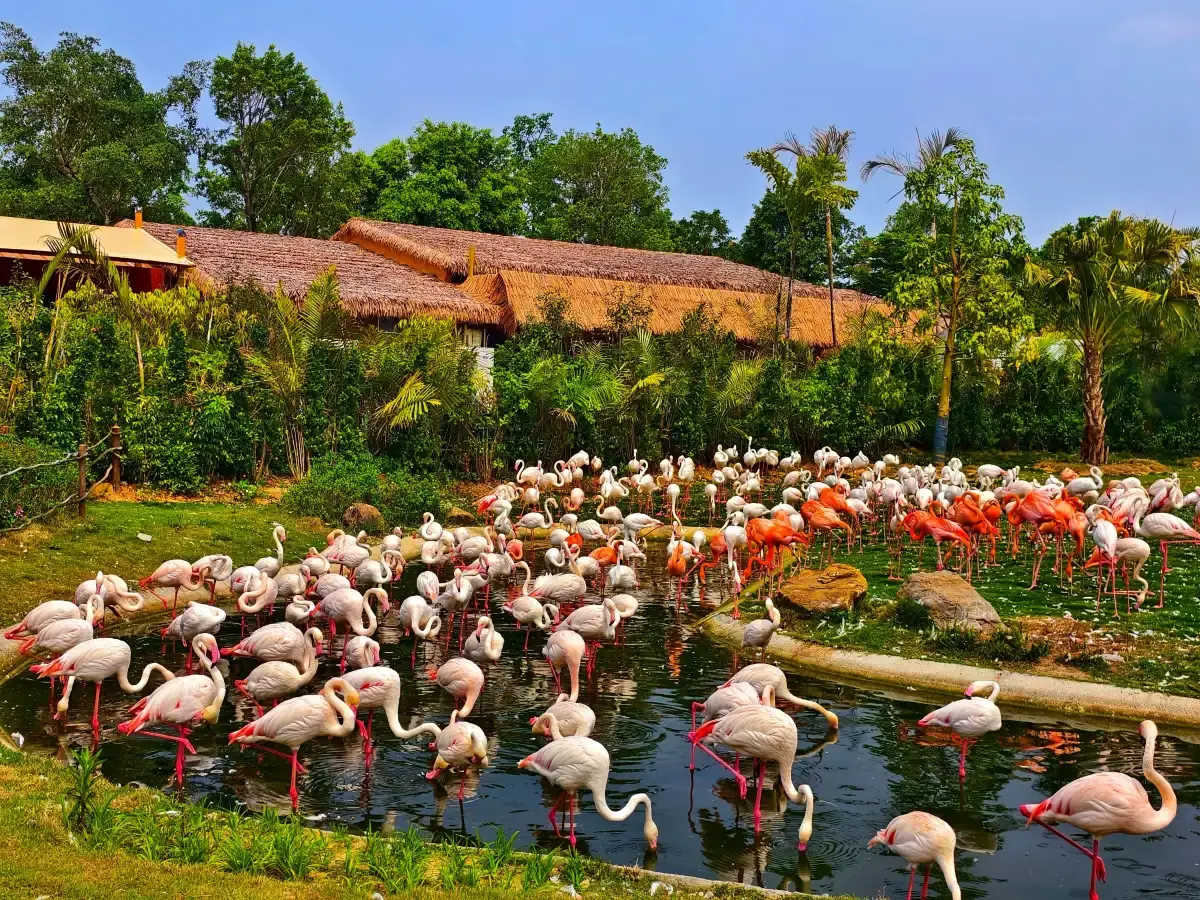
The wetland belt — flamingo lake, the crane and stork meadows, the pelican shallows — is the park’s most underrated district and the best late-afternoon plan. Flamingos filter-feed in synchronized lines; crowned cranes dance in short bursts; marabou storks strut like undertakers with opinions. Around 16:00–17:00 the tour groups have thinned and the birds are in their evening routine, which is exactly when photographers get the frames the midday crowds miss.
The district also hides the Little Bug World science halls, where the park’s smallest creatures — invertebrates, reptiles including the giant tortoises — get their own air-conditioned exhibits. Perfect for the hottest hour and for children who need a sit-down: our family guide covers those in detail.
🎬 Four Animal Shows and the Learning Layer 🎓
Beyond the habitats, the park runs four major animal behavior shows, three themed science experience halls, six exploration journeys and six discovery workshops — a deliberate education layer that separates Chimelong from ordinary theme parks. Shows demonstrate natural behaviors (flight, foraging, training-as-enrichment) in the park’s theaters; workshops are hands-on, keeper-led sessions aimed mostly at children but genuinely interesting for adults.
Strategy: photograph the day’s show board at the gate, pick one show and one workshop, and keep the rest of the day in the habitats. Trying to attend everything dilutes the animal time that makes this park special. The full venue-by-venue breakdown is in our entertainment guide.
🤝 Encounter Etiquette: What Keeps This Place Special 🌿
- Feeding is by keepers’ rules only. Hand-feed where platforms allow it; never from the train, never over fences. The animals have precise diets.
- No flash at the owls and night houses, and low voices around the primates — you are visiting their homes.
- Keep strollers off the boardwalk rails and children inside the walkways; the wetland fences are there for the birds’ nesting areas.
- Binoculars beat zoom lenses at Lion King Mountain — the distance is deliberate and the cats are small in most phone frames.
And if photography is your reason for coming, our dedicated guide maps the 15 best frames and their light: 15 Best Photo Spots.
🚚 The Upgrade: Wild Truck – Exploring Africa 🐘
For visitors who want the guided, closer-to-the-animals version, the Wild Truck – Exploring Africa study tour (around US$29.66 on Trip.com) puts you on an open truck with a keeper-narrated route through the safari sections. It pairs naturally with the steam train — train for panorama, truck for proximity — and books out fastest on weekends. Reserve it alongside admission on Trip.com if it is a priority for your group.
📋 The Species Checklist: Who Lives Where 📒
A quick-reference census of the park’s headline residents — screenshot this and tick as you go:
| Species | District | Best Window | Reliability |
|---|---|---|---|
| Giraffes | Giraffe Savanna | 10:00–12:00 feeding | Certain |
| Zebras / wildebeest | Greater Africa | From the train, all morning | Certain |
| African elephants | Savanna edge paddocks | Afternoon bathing | High |
| White rhinos | Savanna far sections | Train or truck viewing | Medium-high |
| Brown bears | Bear Valley | Morning fishing hours | High |
| Lions | Lion King Mountain | 13:00–14:30 | Medium (cats nap) |
| Ring-tailed lemurs | Forest district | Mid-afternoon sunbathing | High |
| Apes & monkeys | Ape & Monkey Island | Feeding rounds | High |
| Macaws & parrots | Parrot Rainforest | Walkway perches all day | Certain |
| Eagle owls | Forest groves | Shaded rest, quiet hours | High |
| Flamingos | Flamingo lake | 16:00 feeding lines | Certain |
| Cranes & storks | Wetland meadows | Late afternoon | High |
| Pelicans | Shallows | Any | High |
| Giant tortoises | Little Bug World exhibits | Indoor, any hour | Certain |
Fourteen ticks in a day is a complete visit; twelve is normal; the lemur sunbathing pose alone justifies the trip for many visitors — it is that photogenic.
🌡️ Seasonal Behavior: The Same Park, Different Animals 🍂
Return visitors often report the park feeling “different” — the animals are seasonal actors:
- Spring (March–May): peak activity. Mornings bring courtship displays among the cranes, more vocal primates, and the famous valley mist over the giraffe fields.
- Summer (June–August): the crepuscular shift — animals concentrate their energy into the first and last hours; midday belongs to pools and shade. The bears swim, the elephants bathe long, the cats doze theatrically.
- Autumn (October–November): our favorite — stable activity through the day, thick winter coats growing in on the bears, flamingo lines at their most synchronized.
- Winter (December–February): cool mornings delay the start; the savanna wakes late but stays active through the afternoon. The lemurs’ sunbathing ritual becomes an all-day occupation.
Pair this with the month-by-month calendar and you can plan not just which day, but which hour belongs to which species.
🧑🔬 Keeper Talks, Enrichment and the Learning Layer 🎓
The park’s education program is what elevates an animal day from watching to understanding:
- Enrichment in action: watch for puzzle feeders, browse scattered in unusual places and scent trails — the keepers’ daily work to keep minds busy. The bears’ “fishing” and the lemurs’ rope-bridge gymnastics are enrichment you are watching, not accident.
- Keeper rounds: scheduled talks at the major habitats; the boards list times. The giraffe and elephant rounds answer the questions children actually ask (“how much does he eat?” — a lot).
- Discovery workshops: six hands-on sessions across the week — diet prep, enrichment building, mini-ecology. Book-shaped children should get one: the family guide builds a day around it.
- The three science halls give the context — habitat maps, conservation stories, interactive stations. Perfect at midday when the sun rules the outdoors.
❓ Frequently Asked Questions
Which animals will I definitely see?
Giraffes, zebras, wildebeest, ostriches, brown bears, lions, lemurs, flamingos, parrots and the elephant herd are reliable sightings across a single day. Rhinos, cranes and storks are frequent but move between paddocks; anything else is a bonus.
When is feeding time?
Grazers feed most actively right after the 10:00 opening and again after 15:30 in cool hours. The day’s official feeding and show schedule is posted on the board at the main gate — photograph it on arrival, because sessions shift by season.
Can I touch the animals?
Only at designated experiences, chiefly the giraffe feeding platform. Everything else is observe-from-the-walkway by design — for the animals’ health and yours. Keepers will stop unauthorized feeding quickly.
Is the animal care credible?
Chimelong operates to the standards of China’s leading zoo group, with the park explicitly built around conservation education — the science halls, workshops and keeper-led tours are core product, not decoration. Judge the enclosures yourself: the savanna and forest habitats are open-landscape style rather than cage-based.
How much extra time do the animal experiences need?
Giraffe feeding is 10–15 minutes; a show is about 30 minutes; the Wild Truck tour runs about an hour. Add all three and a full day still works — trim by skipping one show, not the savanna.
🌟 结语
The animals are the kingdom; the rides are the garnish. Come for the 10:00 savanna, take the giraffe branch in your own hand, give the lions their post-lunch hour and the flamingos your last golden one — and this park will feel less like a theme park and more like the forest kingdom its name promises.
评论