


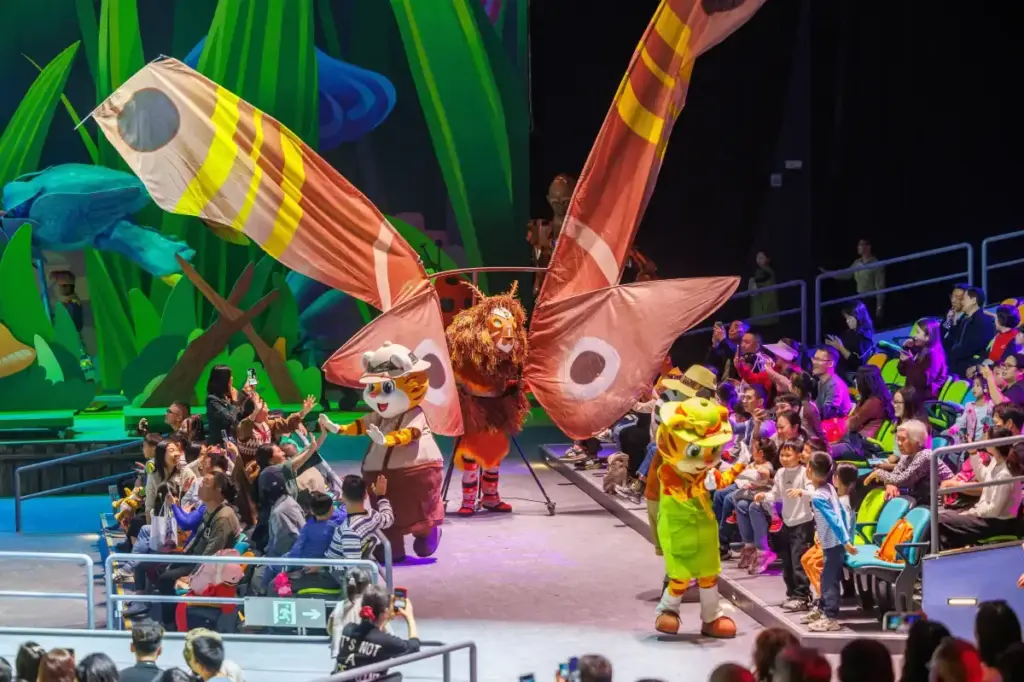
Between the savanna and the coasters, Reino forestal de Qingyuan Chimelong runs a full entertainment program: four major animal behavior shows, the stage productions of the Twin Treasures Theater, three science experience halls, six discovery workshops, and street parades that roll through the forest paths with bug-eyed floats and dancing keepers. Most visitors see one show by accident and miss the rest. This guide maps every venue, explains what each show actually is, and builds the schedule logic that fits entertainment into an animal-and-rides day without ruining either.
Showtimes change by season and even by week — treat everything below as structure, and photograph the day’s schedule board at the main gate on arrival. Facts verified against the park’s official Trip.com listing in November 2026.
⚡ Quick answer: Pick one animal behavior show in the early afternoon (theaters are shaded and cool right after lunch), catch the parade when it passes your zone rather than chasing it, and give children one discovery workshop — the sessions are the park’s best-kept educational secret. Save the Ferris Wheel for sunset, not the theater.
🎭 The Venue Map: Where Entertainment Lives 🗺️
| Venue | What Runs There | Best Slot |
|---|---|---|
| 🎪 Twin Treasures Theater | Stage productions with costumed characters, circus-style acts and audience participation | Early afternoon |
| 🦜 Animal behavior show venues (4 program theaters/stages) | Flight, foraging and training demonstrations by the park’s animal teams | Morning first session or early afternoon |
| 🔬 Science experience halls (3) | Interactive conservation and nature exhibits, part show, part classroom | Hottest hour, 12:00–14:00 |
| 🛠️ Discovery workshops (6) | Hands-on keeper-led sessions, mostly for children | Check the daily board — sessions run through the day |
| 🎺 Parade route | Themed floats, costumed performers, bug-characters | Wherever you are when it passes — do not chase it |
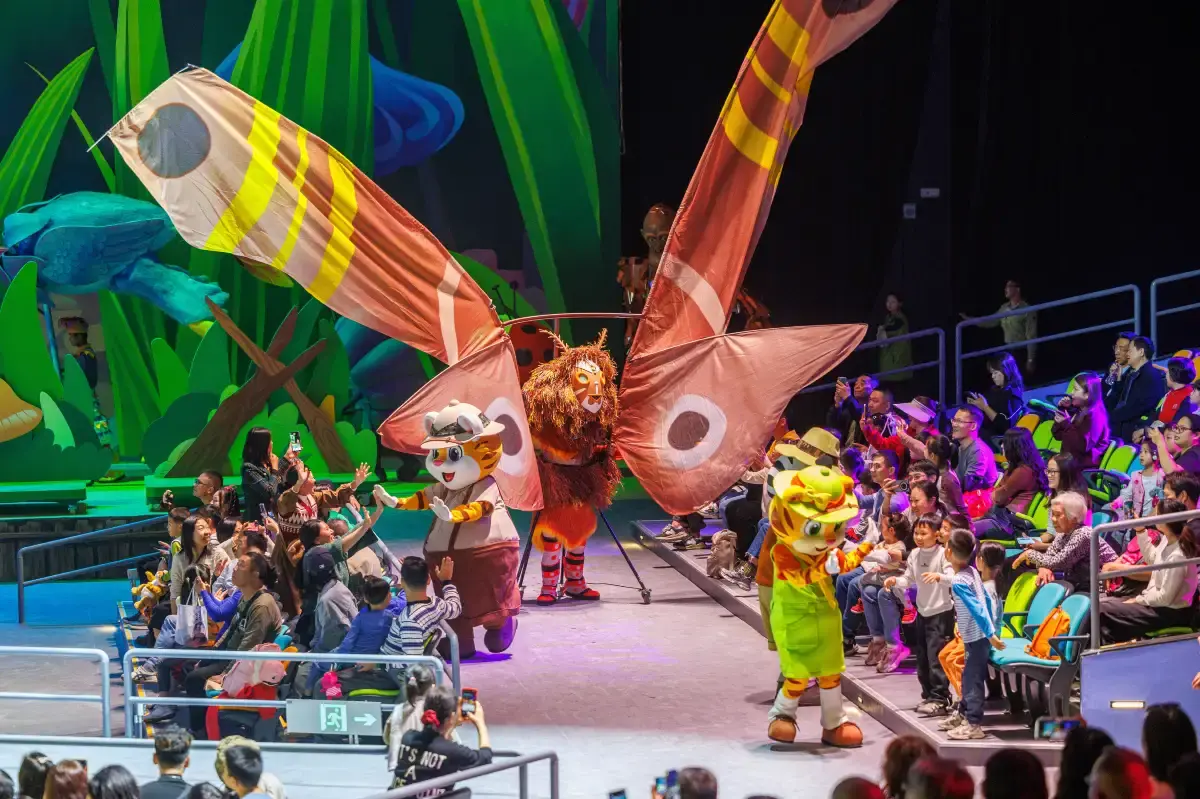
🎪 The Twin Treasures Theater: The Anchor Show 🌟
El Twin Treasures Theater is the park’s purpose-built stage venue and the anchor of its entertainment program. Productions mix costumed characters, acrobatic and circus-style acts, LED-heavy staging and — this being Chimelong — an educational thread about the forest and its animals that never quite becomes a lecture. The show runs multiple sessions daily; the early-afternoon slot is our pick because it converts the post-lunch slump into a seated, air-conditioned hour.
Seating strategy: arrive 15 minutes early and sit center, one-third back — the staging is designed for that axis, and the audience-participation moments reach the center aisles first. Families with small children should avoid the front rows if their children startle at sudden lighting and sound; the production is loud by design.
🦅 The Four Animal Behavior Shows: What They Really Are 🦉
The park’s four animal behavior programs are demonstrations of natural behavior — flight, foraging, enrichment training — led by keeper teams. They are the closest thing to a wildlife documentary happening in real time, and they double as the park’s conservation messaging: every show ends with the same quiet point about habitat protection.
What distinguishes a good show slot from a bad one:
- First sessions (late morning) have the most alert animals — especially birds of prey and the parrot flight programs, which dim noticeably in the hot hours.
- Early-afternoon sessions suit humans better: shade, seating, and the post-lunch rhythm we keep coming back to.
- Arrive 10–15 minutes early for the bird shows in particular; the best photography is during the warm-up flight, and standing room disappears.
No flash at any animal show, and keep small children on your lap for the first minutes — the first eagle flyover has surprised more than one toddler into tears.
🔬 The Three Science Halls: The Rainy-Day and Hot-Day Insurance 🌡️
The three themed science experience halls are the program’s quiet overachievers. Part exhibition, part interactive theater, they walk visitors through forest ecology, animal senses and the park’s conservation work with hands-on stations that children actually use rather than glance at. On a 35°C afternoon or a rainy morning, these halls convert a dead hour into the most educational stretch of the trip — and they are where we have overheard the best keeper explanations.
If you are visiting with children aged 5–12, schedule one hall after lunch and let the children set the pace inside. The exhibits reward curiosity more than speed.
🛠️ The Six Discovery Workshops: The Secret Best Value 🔑
Half the visitors never notice the discovery workshops — small, keeper-led, hands-on sessions scattered through the day and week: animal-diet preparation, enrichment-building, mini-ecology lessons. They are included with admission, they cap group sizes, and they are the single best educational value in the park.
Practical notes: sign up or line up early (the board at each hall lists times), expect 20–40 minutes, and expect the session language to be Chinese-heavy — the doing transcends the talking, and keepers are patient with international children. Our family guide builds a full kid-day around one workshop, one show and the bug rides.
🎺 Parades and Street Characters: The Free Bonus 🎉
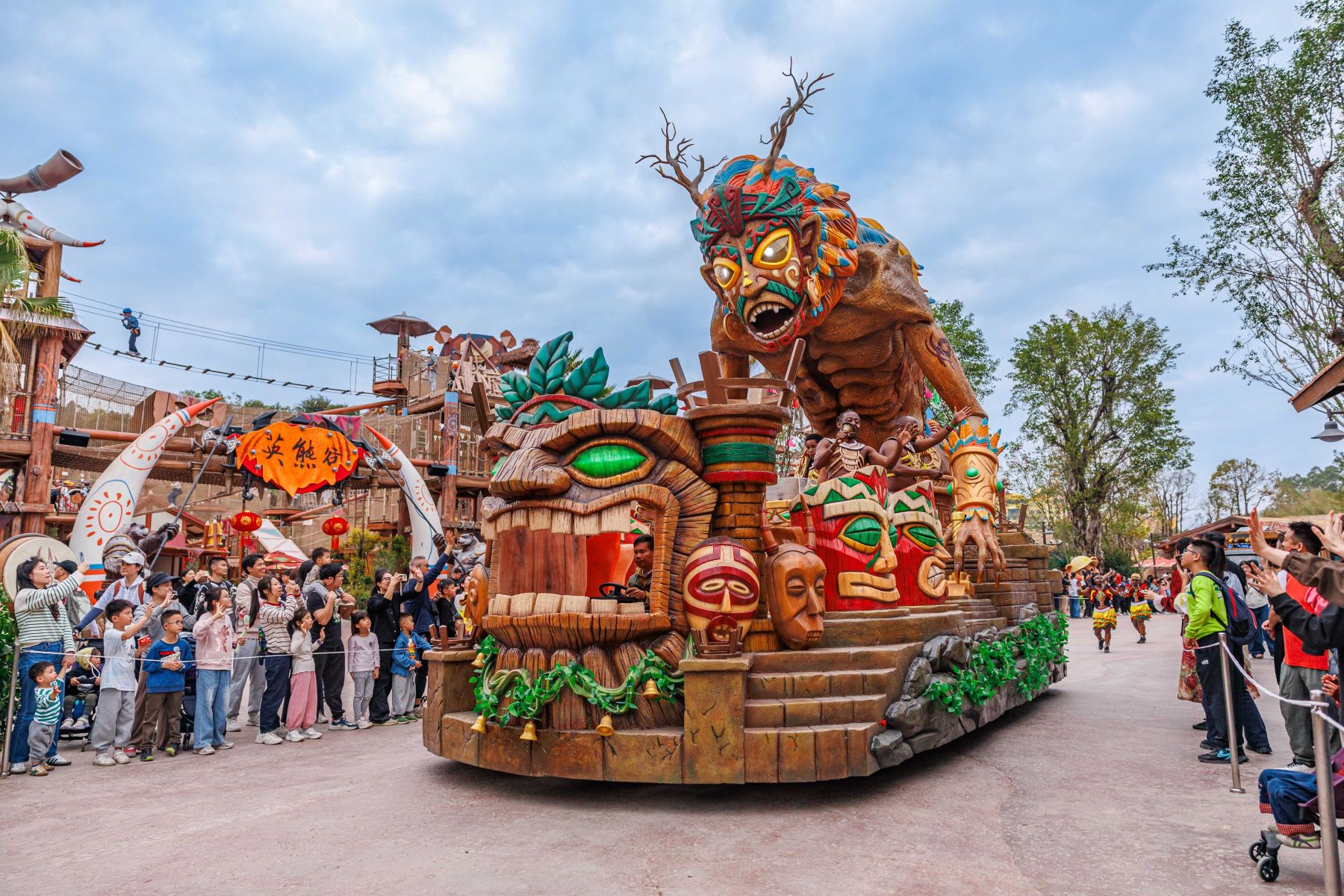
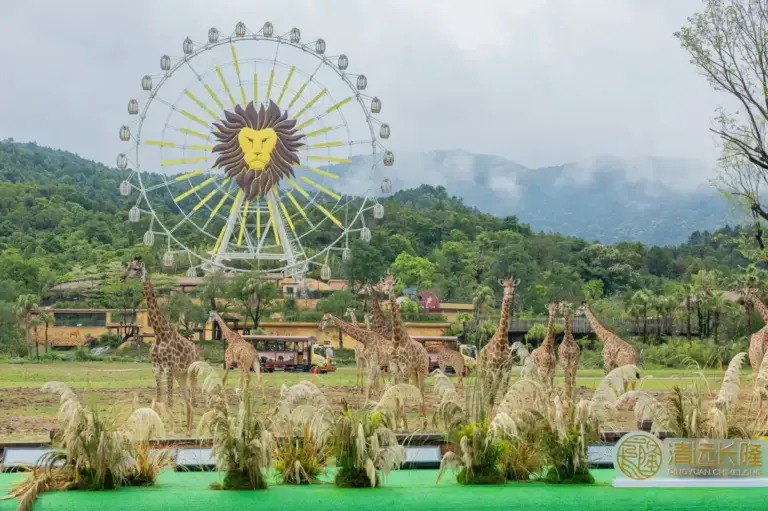
Once or twice a day, the parade rolls out: themed floats — a tiki-style drum float, a bug-band car — with costumed dancers and characters working the crowd. The parade is short and the route is long, which produces the most common rookie mistake in the park: chasing it. Do not. Check the board for the time, note the route, and simply be somewhere on it five minutes before — a shaded bench near the Giraffe Savanna is our favorite intercept point.
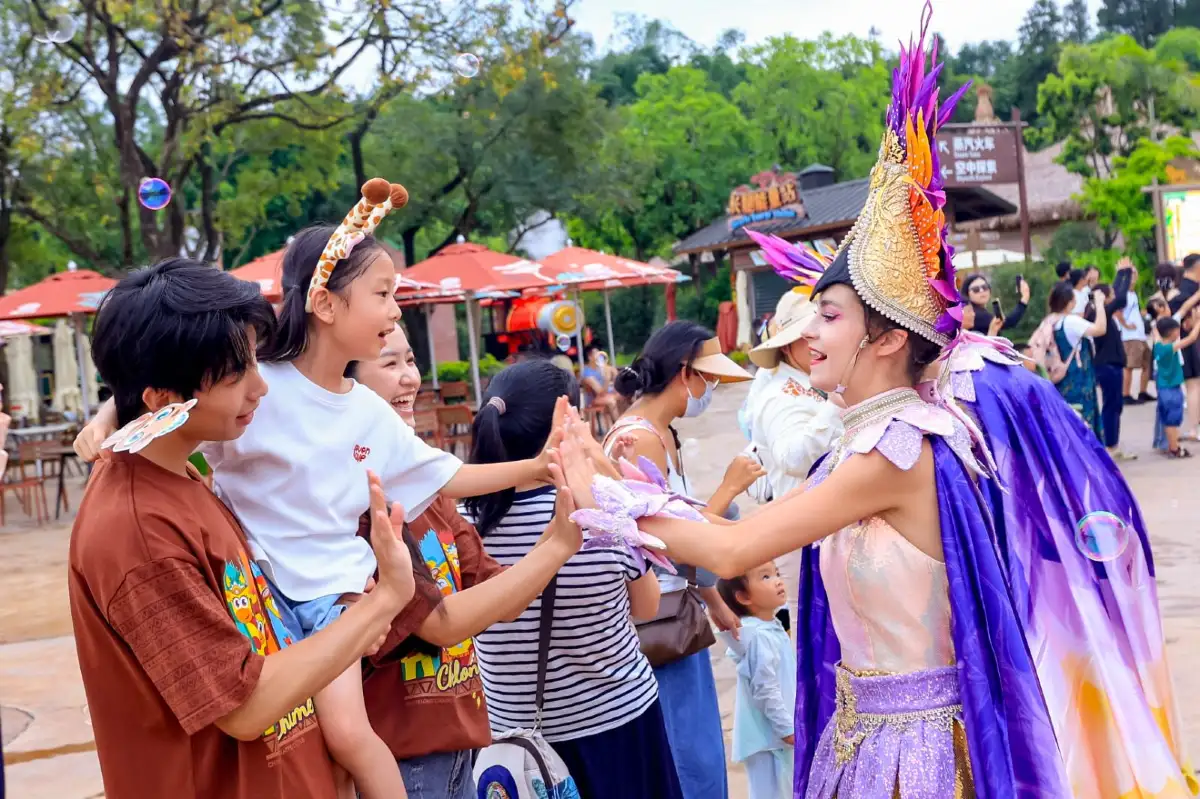
Between parades, roving characters — fairies, keepers with animal puppets, the bug mascots — work the forest paths, especially around Little Bug World. They find children faster than children find them.
⏰ A Realistic Entertainment-Day Schedule 📋
For visitors who come for animals and stay for shows, this is the day that works:
| Time | Block |
|---|---|
| 10:00–11:00 | Steam train through Greater Africa (animals first, shows second) |
| 11:00–12:00 | Giraffe feeding platform before the lines form |
| 12:00–13:00 | Lunch at the Giraffe Restaurant or a park eatery |
| 13:00–14:00 | Animal behavior show or Twin Treasures Theater (shade hour) |
| 14:00–15:00 | One science hall or a discovery workshop for the kids |
| 15:30–17:00 | Thrill Ridge or the savanna again — rides and animals beat shows in the best hours |
| 17:00–18:00 | Parade intercept, then the Ferris Wheel farewell |
The same skeleton with rides prioritized instead lives in our one-day itinerary; the two-day version that adds the safari park and hot springs is the resort triangle weekend.
🎟️ What Shows Cost (Nothing) and What to Book Ahead 🎟️
Every show, hall, workshop and parade is included with park admission — from about US$37.99 adult on Trip.com with current discounts. Nothing entertainment-side needs advance booking; only the Wild Truck safari tour (≈ US$29.66) and the Giraffe Castle buffet benefit from reserving ahead. Entry requires your original passport with name-matched tickets — the full rules are in our ticket guide.
🎯 What Each Show Type Actually Delivers (Honest Expectations) 🔭
Theme-park show names oversell and undersell in equal measure. Here is the honest calibration from watching them:
| Program | What It Is | What It Is Not | Skip If… |
|---|---|---|---|
| Animal behavior shows (4) | Real trained behaviors tied to natural instincts — flight, retrieval, foraging puzzles | Not a circus: no costumes on animals, no tricks against nature | You want spectacle over substance |
| Twin Treasures Theater production | Full stage show: characters, acrobatics, LED staging, comedy beats | Not a quiet experience — it is loud and proud | Your toddler startles at sudden sound |
| Science halls (3) | Interactive ecology exhibits with live stations | Not a classroom — children drive the pace | You are chasing rides only |
| Discovery workshops (6) | Hands-on keeper sessions, small groups | Not a performance — participation is the product | You cannot commit 30–40 minutes |
The pattern worth knowing: the animal shows and workshops trade polish for authenticity, the theater trades authenticity for polish, and the science halls sit between. A good day touches all three registers.
📷 Watching Shows with a Camera (and with Kids) 🎬
- No flash at animal shows — the birds’ eyes and the dark theaters make flash both useless and unwelcome. Raise ISO instead; modern phones handle the indoor light well.
- The flight moments are the keeper shots: pre-focus where the trainer stands, then track. Video at 60 fps salvages most birds-in-motion frames.
- Theater productions allow photography in most sessions — follow the room; ushers signal politely if a section restricts it.
- With children: the front third of any show is the participatory zone — performers pull from aisles. Eager children: front. Shy children: one row back from the participation line, close enough to watch, far enough to observe first.
- Exiting: theaters empty fast and completely — a two-minute head start to the next attraction if you sit rear-left, which is our standing seat for exactly this reason.
🍲 Combining Shows with Meals and Breaks 🍽️
The scheduling insight that separates a smooth day from a scrappy one: shows and meals are each other’s buffers. The venues cluster conveniently:
- Lunch → early-afternoon theater. Eat at 11:45 near your chosen venue; the 13:00–13:30 session absorbs the food coma in air-conditioned seats.
- Show → science hall → snack. The halls sit near the family zone; a 30-minute hall visit plus ice cream resets children for the afternoon push.
- Last show → dinner at the lakeside village. The evening schedule leaves a natural gap before closing; the village is on the exit side and turns the day’s end into a slow meal instead of a parking-lot scramble. The dining guide picks the tables.
🎪 Street Entertainment: The Between-Times Layer 🎉
Scheduled shows get the billboards, but the between-times layer is where the park’s charm concentrates:
- Character meet-and-greets drift through the family zone mid-morning and again before the parade — fairies, bug mascots, keeper-puppet walkarounds. They find enthusiastic children; shy children can watch from a bench without being pulled in.
- The parade (check the board for the daily time) rolls the main route with the drum float and bug band. The two best intercept points are the shaded benches near the Giraffe Savanna and the wide plaza by the Little Bug World arch — arrive five minutes early, not twenty.
- Busking-style moments — keepers with an owl on the glove, a macaw perch wheeled to the walkway — appear without schedule near the science halls. They are five-minute gems; budget curiosity, not time.
🧭 Building the Entertainment-First Day (For Rain, Heat or Show-Lovers) 🗓️
Some visitors come for the program as much as the animals — and on two kinds of days (summer heat, rainy season), entertainment-first is the right skeleton:
| Time | Block |
|---|---|
| 10:00–11:00 | Steam train (animals while the day is cool — non-negotiable even for show-lovers) |
| 11:00–12:00 | Science hall #1 |
| 12:00–13:00 | Early lunch |
| 13:00–14:00 | Twin Treasures Theater or animal show #1 |
| 14:00–15:00 | Discovery workshop (children) / science hall #2 (adults) |
| 15:30–16:30 | Animal show #2 or the parade, then the flamingo lake as the heat breaks |
| 17:00–18:00 | Ferris Wheel, gift shop, exit |
It is a full day that never queues for a ride — the exact plan we hand to grandparents and to July visitors. Pair it with the standard itinerary and you hold both weathers.
❓ Frequently Asked Questions
How many shows are there per day?
The park runs four major animal behavior programs plus theater productions at the Twin Treasures Theater, with multiple sessions of each across the day. Exact times are posted daily at the main gate and at each venue — they vary by season.
Are the shows in English?
Mostly Mandarin, with visual storytelling carrying the plot. International visitors follow comfortably; the animal behavior shows need the least language, and keepers are helpful with non-Chinese children in the workshops.
Which show is best for toddlers?
The Twin Treasures Theater production and the gentler animal demonstrations. Sit center-back rather than front-row — the productions are loud and bright up close.
Do I need to book shows in advance?
No — all entertainment is included with admission and first-come seating. Arrive 10–15 minutes early; only the parade is catch-as-catch-catch.
What if it rains?
That is what the theaters and science halls are for. A rainy day here still fits one show, one hall, one workshop and a long lunch — which is a good day by any standard.
🌟 Reflexiones finales
Entertainment at Qingyuan Chimelong earns its place because it never competes with the forest — it explains it. One show for the spectacle, one workshop for the wonder, one hall for the heat, and the parades wherever they find you. Do that, and the program becomes what the designers intended: the layer that turns a park visit into a story your children retell for months.
Comentarios