


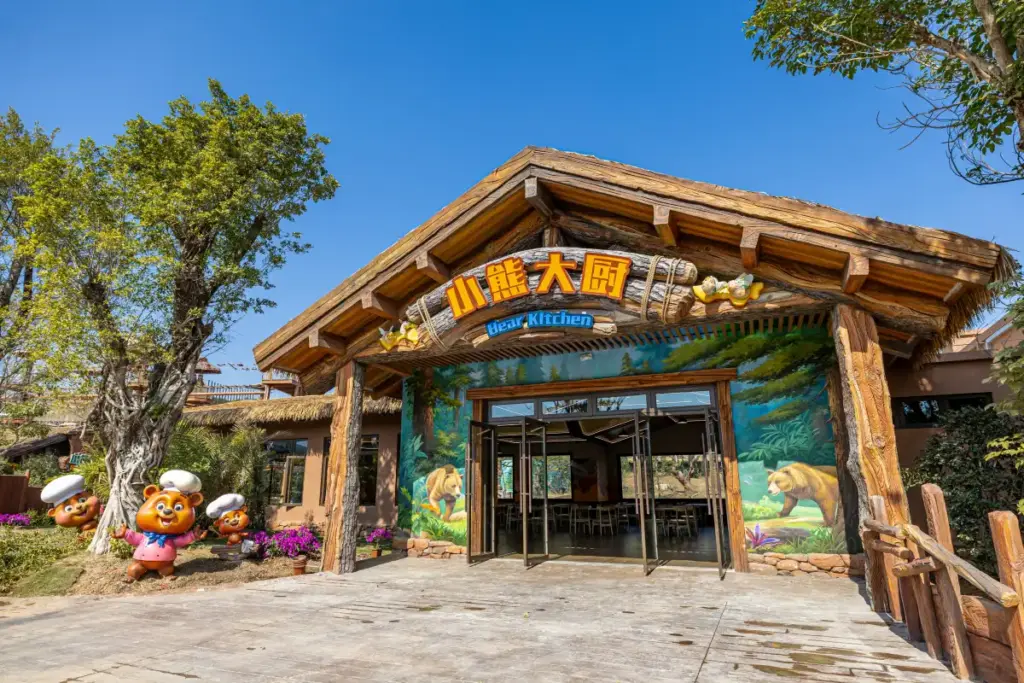
Theme-park food is usually a tax you pay for convenience. At Königreich Qingyuan Chimelong Wald, it is better than that: the park’s restaurants range from an African-lodge buffet with giraffes at the window to themed dining halls and snack stands with genuinely local character — and just outside the gate, Qingyuan province’s famous free-range Qingyuan chicken (清远鸡) waits in restaurants that locals actually queue for. This guide covers both worlds: what to eat inside the park, what it costs, and how to finish your trip with the region’s signature dish done properly.
Prices below come from the park’s official Trip.com listing and our own receipts, checked in November 2026. Menus change seasonally; treat figures as honest ballparks, not contracts.
⚡ Quick answer: Book the Giraffe Restaurant buffet (from about US$14.68) for the breakfast-with-giraffes experience, eat a normal-price noodle or rice set for lunch (roughly US$8–15 per person), keep snacks to ice cream and fruit cups, and save one dinner for white-cut Qingyuan chicken with ginger-scallion oil outside the park.
🍽️ The Park’s Dining Landscape at a Glance 🗺️
| Venue Type | What You Get | Ballpark (per person) |
|---|---|---|
| 🦒 Giraffe Restaurant buffet | Full buffet with the giraffe-paddock glass wall | From ≈ US$14.68 |
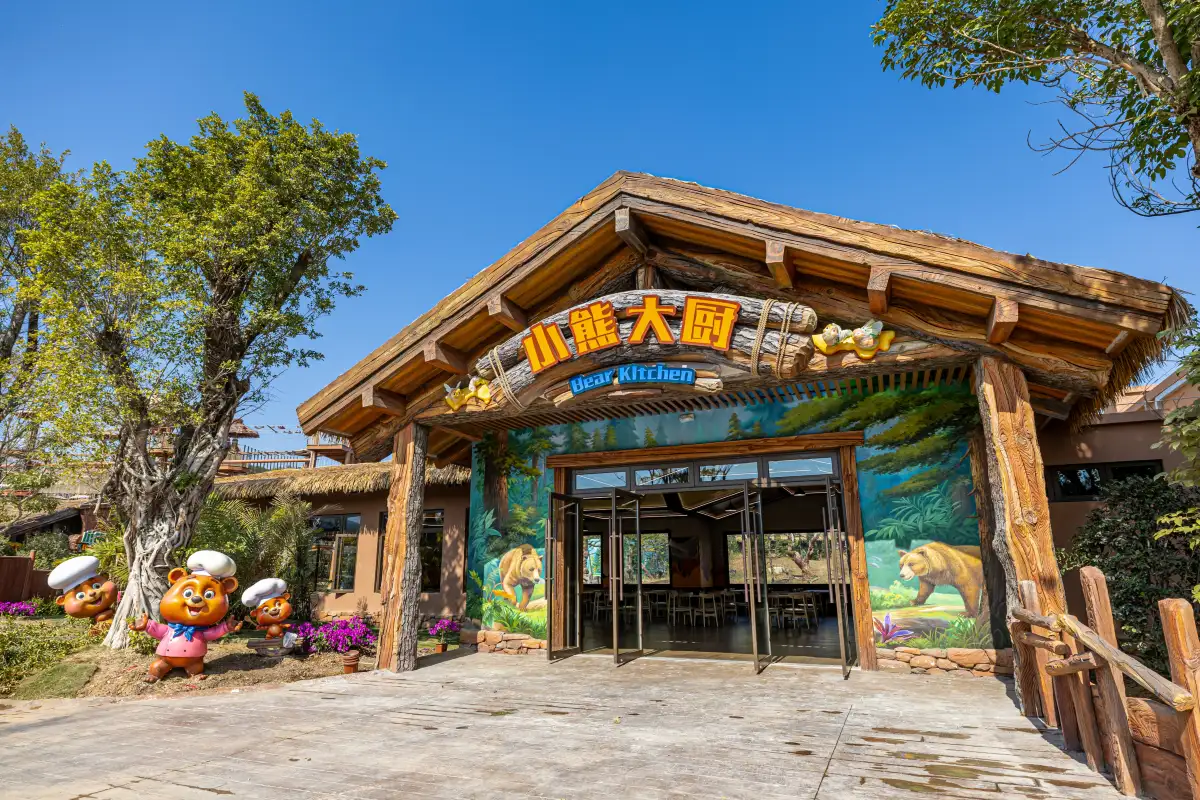
| 🏯 Themed restaurants & food courts | Noodle soups, rice sets, dumplings, roast meats | ≈ US$8–15 |
| 🍭 Snack stands & candy shops | Ice cream, waffles, popcorn, fruit cups, drinks | ≈ US$2–6 |
| 🍯 Candy Shop district | Dessert-first zone near the candy arch | ≈ US$3–8 |
| 🌆 Lakeside dining village (park edge) | Sit-down dinners, evening atmosphere | ≈ US$10–20 |
🦒 The Signature Meal: Giraffe Restaurant Buffet 🥐
The buffet at the Giraffe Restaurant — inside the Giraffe Castle hotel, steps from the park gate — is the park’s culinary signature. The dining room’s glass wall faces the giraffe paddock, the spread runs congee-to-croissants, and the whole production costs from about US$14.68, which is less than many airport sandwiches. Go at opening for the window seats, book ahead on weekends, and treat it as the experience it is: breakfast television, broadcast live by giraffes.
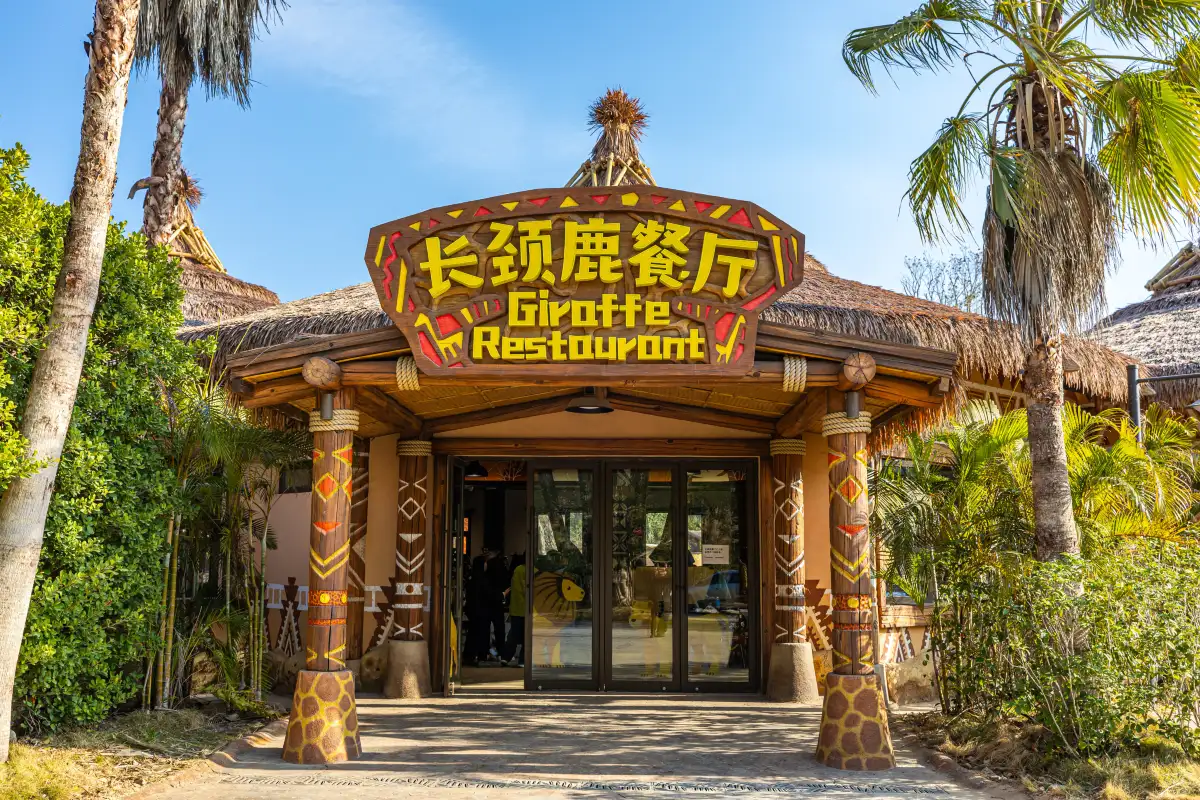
Non-guests can reserve it too; our Giraffe Castle hotel guide covers the restaurant from the guest side, including which rooms face the same paddock.
🍜 Lunch Inside the Park: The Sensible Orders 🥢
Midday dining inside the park is standard Chinese theme-park fare, executed honestly: noodle soups, rice-and-topping sets, dumplings, roast-meat plates. Portions run child-friendly and adult-sufficient, and the air-conditioned halls convert lunch into the daily cool-down hour. Our standing order for a family of three: two rice or noodle sets, one dumpling plate, one soup to share — comfortably inside US$25–30 total.
Three timing rules we learned the hard way:
- Eat at 11:45, not 12:30. Tour groups flood the food courts from 12:15; the same meal costs you twenty minutes of queue if you are late.
- Pick the hall by your next destination, not by menu — the venues are similar in quality, and staying on your route saves a full loop of the park.
- Refill water at the stands, buy one drink, and carry the bottles. Guangdong heat makes hydration the real lunchline.
🍭 Snacks, Candy and the Little Victories 🍦
Der Candy Shop district — the pink-lollipop arch you will photograph anyway — is the dessert anchor: fudge, gummies, candied fruit and the waffle stands children orbit. Ice cream (around US$2–4) is the park’s best-value air conditioning, and the fruit cups sold across the savanna zone are the snack we buy every afternoon without fail.
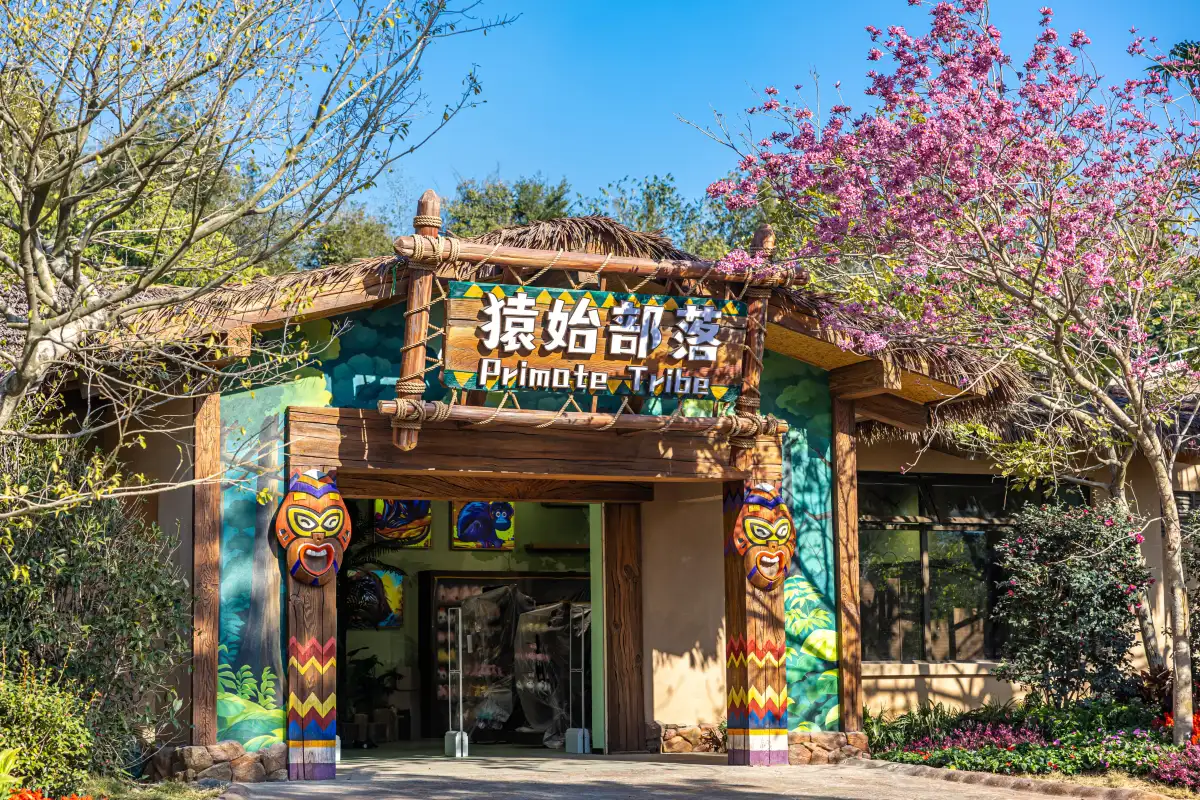
Two honest notes: portions are small-and-cute rather than filling, so snacks supplement lunch instead of replacing it; and the souvenir shops near the exit sell plush giraffes that children will remember longer than any snack — decide your policy before you enter. Our budget guide prices the full snack day.
🌆 The Lakeside Dining Village: Dinner Mode 🌙
On the park’s edge, the lakeside dining village switches the mood from theme park to evening town: sit-down restaurants, lantern light, and the first quiet of the day. For overnight visitors staying at the Giraffe Castle, this is the natural dinner stop between the park’s closing hour and the hot springs — relaxed enough for tired children, atmospheric enough for a date night.
🐔 Outside the Gate: Qingyuan Chicken, Done Properly 🍗
Qingyuan’s culinary fame rests on one bird: the Qingyuan chicken (清远鸡), a free-range breed raised in these hills, prized for tight, springy meat and thin skin. The classic preparation is white-cut chicken (白切鸡) — poached whole, chilled, chopped, and served with ginger-scallion oil — and it is the dish to order first in any restaurant around the resort or in Qingcheng District.
How to order it like a local:
- Say or show: 清远鸡,白切 (“Qingyuan chicken, white-cut”) — or simply point at the bird in the display case, which is how half the regulars do it.
- Half a bird feeds two adults; a whole bird is a family order. Add greens and a soup and the table is complete.
- The ginger-scallion oil is the point — spoon it generously. If the restaurant also offers salt-baked (盐焗) versions, order it as the second dish, not instead of the classic.
- Meal cost outside the park runs roughly US$10–20 per person — less than the park’s food courts, more atmosphere.
🥗 Dietary Notes for International Visitors 🌏
- Vegetarian: noodle stalls and rice sets can be ordered meat-free (say 素的, “vegetarian”), and the buffet’s vegetable and salad stations are dependable.
- Halal: options inside the park are limited; the safer plan is a city restaurant on your transit route — the concierge at the Giraffe Castle can point you to one.
- Allergies: peanut and sesame oils appear widely; the buffet’s labeled stations are the easiest environment to manage. Show allergy cards in Chinese for the smaller stands.
- Children’s staples — plain noodles, steamed eggs, fried rice — exist at every food court and rescue picky eaters everywhere.
🧮 Eating on a Budget vs. Eating the Experience 💰
The full money picture — tickets from ≈ US$37.99, snacks, hotels, transport — lives in our budget guide, but the food-only version is simple: a self-catering snack day inside the park costs about US$10–15 per person; one buffet plus one food-court lunch plus one outside dinner runs about US$30–40 across a weekend. The buffet is the splurge that pays in memories; everything else has a cheaper equal within ten minutes’ walk.
☕ Coffee, Drinks and the Hydration Economy 🥤
Guangdong heat makes drinks a budget line, not an afterthought. The field notes:
- Coffee: proper espresso-based coffee lives in the hotel-side outlets and the lakeside village; in-park stands pour stronger instant-style mixes. If coffee is serious business, anchor your morning at the Giraffe Castle before the gate.
- Tea and coolers: lemon tea, herbal coolers and fresh-fruit drinks appear across the snack stands — the fruit-tea cups are the park’s best-value cold drink on hot days.
- Water strategy: buy one bottle, refill at stands and restaurant water stations. Two people sharing refills save a small but real amount over a full day — the budget guide counts it.
- Ice cream index: the sticks and cups run US$2–4, and the afternoon cone doubles as air conditioning. We rate it the park’s best small purchase.
🕒 A Day of Eating: The Full Timeline 🗓️
Here is how the meals actually sequence on our ideal park day — food placed where the day needs it, not where the map places restaurants:
| Time | Eat/Drink | Why Here |
|---|---|---|
| 08:30 (hotel guests) | Giraffe Restaurant buffet | The signature breakfast; fuels the 10:00 opening hour |
| 10:45 | Fruit cup from a savanna stand | Light, cold, keeps hands clean for the giraffe platform |
| 11:45 | Food-court set lunch | Beats the 12:15 tour-group wave; AC recovery hour |
| 14:30 | Ice cream at the Candy Shop district | The post-show treat; children earn it, adults deserve it |
| 16:30 | Fruit tea + popcorn (shared) | Bridge snack before the last ride block |
| 19:00 (outside) | White-cut Qingyuan chicken dinner | The trip’s best table, ten minutes from the gate |
🍢 The Dishes Worth Ordering By Name 🥟
Between the obvious noodle-and-rice staples, these are the plates we reorder:
- Wonton noodle soup — the reliable crowd-pleaser at the food courts; light enough for a midday park meal, universally child-approved.
- Steamed egg with scallions — the toddler savior; soft, warm, present on every proper Chinese menu.
- Char siu (BBQ pork) rice — the hearty choice for big-appetite teenagers; the sweet glaze does the persuading.
- Dumplings (steamed) — the shareable plate that turns lunch into a table event; order two portions for four people.
- Double-skin milk (双皮奶) — the Cantonese dessert custard; if any in-park counter has it, end the meal there. Sweet, cooling, quietly perfect.
- Qingyuan chicken, white-cut — outside the gate, the region’s signature; see the section above for ordering it like a local.
💰 Money Notes: Paying, Tipping and Small Sums 💳
- Payments: mobile wallets dominate; international cards work at major counters but stall at small stands. Keep a little cash (small notes) for ice cream carts and the odd stubborn terminal — the budget guide suggests the amount.
- No tipping is expected anywhere in the park or hotels — prices are complete.
- Receipts are automatic at counters; keep lunch receipts if you are tracking trip costs for reimbursement.
🧺 The Self-Catering Play (For Long Stays and Picky Eaters) 🎒
Families staying two nights sometimes run a hybrid: breakfast at the buffet, park lunches as above, and one self-catered dinner from the city’s markets and convenience stores. It works — with boundaries:
- Small snacks and sealed drinks pass security; glass containers and hot food do not — plan picnics for the hotel, not the park.
- The hotel rooms are equipped for light reheating at best; think fruit, bread, yogurt and drinks rather than cooking.
- The honest math: self-catering saves maybe US$10–15 per family dinner and costs a food-market trip. Do it for the experience (Qingyuan’s markets are fun), not the savings alone.
🎉 Seasonal Eating: What Changes Through the Year 🍂
Menus drift with the Guangdong calendar, and returning visitors notice:
- Summer (June–August): the cold-drink and ice sections expand — fruit teas, shaved-ice style desserts and the frozen treats become the park’s best sellers. Double-skin milk gives way to mango sago on many boards.
- Mid-Autumn (Sep/Oct, date moves): mooncakes appear everywhere, including gift boxes at the resort shops — a genuinely good souvenir for the folks back home.
- Winter (December–February): soup-heavy menus return, the hot-tea counters multiply, and the hot-pot-adjacent offerings at the lakeside village make sense of cool evenings.
- Chinese New Year: festive snack boxes and lucky-themed desserts take over the candy district — photogenic, sweet, and priced like the season they celebrate.
None of this changes the core advice — buffet for the experience, food courts for value, Qingyuan chicken for the memory — but matching your snacks to the season is a small pleasure that costs nothing.
❓ Frequently Asked Questions
Can I bring my own food into the park?
Small snacks and water are generally tolerated; full picnic setups and glass containers are not. Security screens bags at the gate. Our honest advice: the park’s food-court prices are close enough to reasonable that carrying a cooler saves little and costs comfort.
How much should I budget for food per day?
About US$15–25 per person inside the park for lunch plus snacks, more if you add the Giraffe Restaurant buffet (from ≈ US$14.68) or dinner at the lakeside village. Outside the park, a proper Qingyuan chicken dinner runs US$10–20 per person.
Do I need a reservation for the Giraffe Restaurant buffet?
On weekdays, usually not; on weekends and holidays, yes. Book it with your room or via Trip.com — window tables go first, and the experience is the window.
What is Qingyuan chicken and is it worth leaving the park for?
It is the region’s signature free-range chicken, served white-cut with ginger-scallion oil, and yes — it is the best meal most visitors eat on this trip. Restaurants around the resort and in Qingcheng District all cook it; half a bird feeds two.
Is there food for picky children?
Every food court serves plain noodles, fried rice and steamed eggs, and the buffet solves the rest. The bigger risk is snack inflation — set the candy budget before you walk past the pink arch.
🌟 Schlussbetrachtung
Eat breakfast beside giraffes, eat lunch in air-conditioned calm, eat dessert under the candy arch — and then, before you leave Qingyuan, eat the chicken. That last table, piled with white-cut Qingyuan chicken and ginger-scallion oil, is the meal that will bring the whole trip back to you years later. The park feeds you well; the region finishes the job.
Kommentare